
2026 Nissan Sentra vs Honda Civic vs Toyota Corolla: Fuel Efficiency and Everyday Value Compared
2026 Nissan Sentra vs Honda Civic vs Toyota Corolla: Fuel Efficiency and Everyday Value Compared
Posted on July 1, 2026
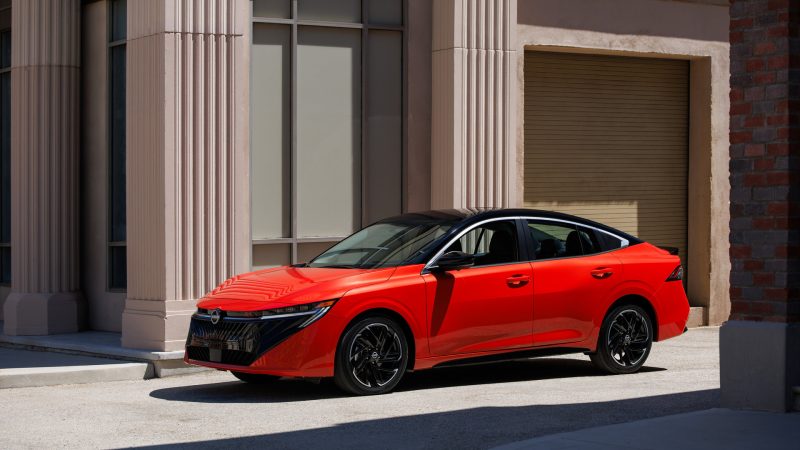
Fuel efficiency is the first question many compact sedan shoppers ask, and three gas-powered cars anchor the class: the 2026 Nissan Sentra, the Honda Civic, and the Toyota Corolla. To keep the comparison fair, we look only at their gas engines, each of which runs on regular fuel.
This guide ranks the city, highway, and combined numbers, shows how small the real-world gap is, and then weighs fuel use against the rest of what each car offers, so you can see which sedan fits your driving.
Fuel Efficiency Head to Head
| Model | City | Highway | Combined |
| 2026 Nissan Sentra (S/SV) | 7.9 L/100 km | 6.1 L/100 km | 7.1 L/100 km |
| 2026 Honda Civic | 7.3 L/100 km | 5.7 L/100 km | 6.6 L/100 km |
| 2026 Toyota Corolla | 7.4 L/100 km | 5.7 L/100 km | 6.7 L/100 km |
How the Numbers Break Down
The Civic posts the lowest combined figure at 6.6 L/100 km, the Corolla follows at 6.7, and the Sentra reads 7.1. On the highway the Civic and Corolla each return 5.7 L/100 km while the Sentra reads 6.1, and in the city the three land at 7.3, 7.4, and 7.9. The Civic leads the group on paper, but the spread from first to third stays inside about half a litre per 100 km combined. All three run on regular fuel, which keeps running costs down across the board.
Fuel Costs in Everyday Driving
A gap of roughly half a litre per 100 km is real, but it stays modest once it plays out over a year of commuting. For a driver covering average distances, the difference among these three works out to a small share of the annual fuel bill. The Sentra helps its own cause with standard idle stop/start, which trims fuel use while you wait at lights, and a fuel tank sized in line with its rivals, so its driving range stays competitive.
The Sentra’s Balanced Case
The Sentra’s combined 7.1 L/100 km sits close to the leaders, and it pairs that economy with strengths the fuel table alone does not capture. It makes 146 lb-ft of torque, more than the Civic’s 133, for stronger response in traffic. It carries 405 L of cargo, more than the Corolla’s 371 L. And it rides on an all-new 2026 platform with a 6% stiffer body and a quieter cabin.
- Combined fuel economy of 7.1 L/100 km on regular fuel, within half a litre of the class leaders.
- 146 lb-ft of torque, more than the Honda Civic.
- 405 L of cargo, more than the Toyota Corolla.
Power and Cargo in the Mix
The Corolla brings the most power here, with 169 hp and 151 lb-ft, while the Sentra (149 hp) and Civic (150 hp) sit close together. On cargo, the Civic leads at 419 L, the Sentra follows at 405 L, and the Corolla holds 371 L. The Sentra’s torque edge over the Civic and its new, more rigid chassis give it a settled, confident feel on the road, backed by a new Sport drive mode on most grades.
What the Civic and Corolla Do Well
Naming the rivals’ wins keeps the comparison honest. The Civic returns the lowest combined fuel figure at 6.6 L/100 km and offers the largest trunk at 419 L. The Corolla makes the most power at 169 hp and 151 lb-ft. Each gives some shoppers a clear reason to choose it.
Which Compact Sedan Should You Choose?
If the single lowest fuel number is your deciding factor, the Civic leads by a small margin. If outright power matters most, the Corolla is the pick. For the buyer who wants strong class fuel economy on regular fuel without giving up torque, cargo room, or the polish of a fresh redesign, the 2026 Nissan Sentra is the most balanced choice of the three.
Talk Fuel Economy With Fish Creek Nissan
Curious how the 2026 Sentra’s fuel economy and everyday comfort suit your commute? Talk to the team at Fish Creek Nissan in Calgary about the 2026 Sentra and line up a test drive.